
Resolution 2797 opens a rare window of opportunity for political progress in the Sahara conflict, but it comes with complex regional challenges
Food Sovereignty in Morocco: Current Situation and Proposed Interventions Policy Brief This policy brief, authored by Professor Mohammed Taher Srairi, examines structural challenges such as water scarcity, import dependency, and ecological concerns, while identifying strategic opportunities rooted in national heritage and modern development goals. It concludes with concrete recommendations for building a resilient and sovereign food future. This brief has been developed within the Just Transition Green Bridge project, a three-year...
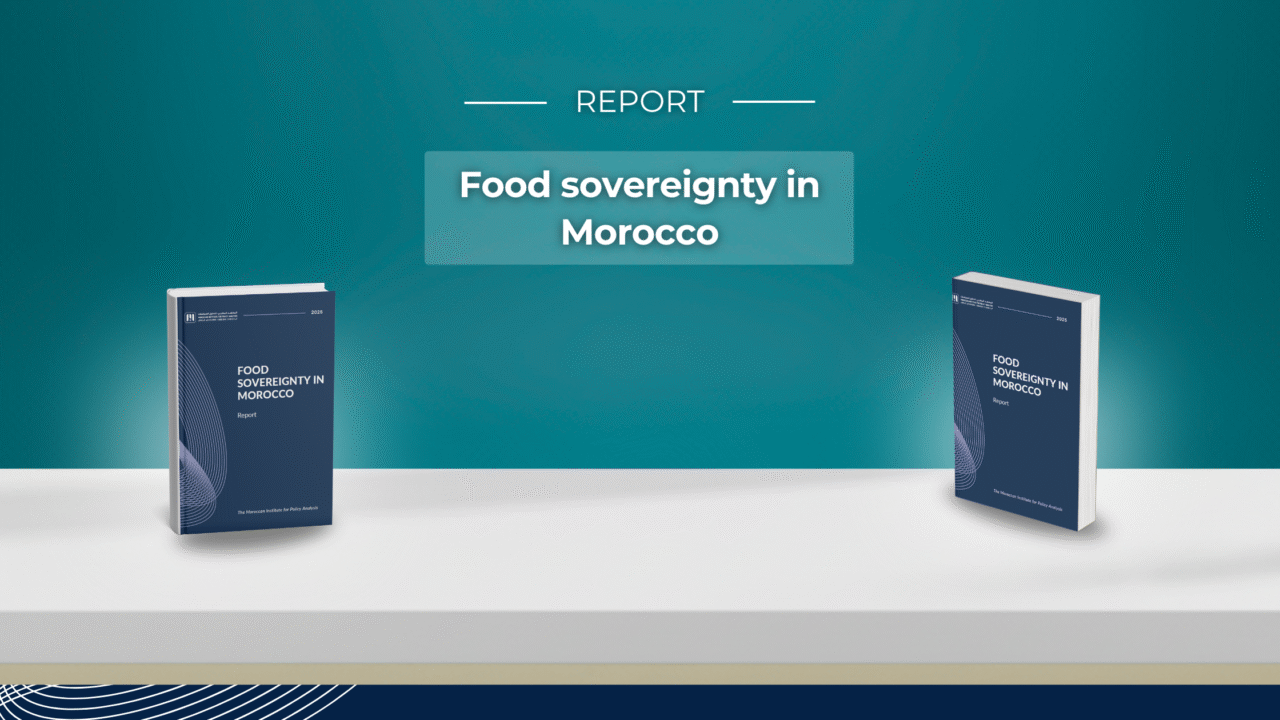
Food sovereignty in Morocco Report This report, produced by the Moroccan Institute for Policy Analysis, analyzes Morocco’s current state of food sovereignty. It relies on a selective sample of scientific studies and official data, complemented by field research in the agricultural regions of Doukkala and Abda. The report examines the variability of domestic food production, the composition of the national food system, and the extent of its dependency on imported commodities such...
Following the government’s takeover of the National Press Council in its previous form and the subsequent rollback of several achievements, eight major challenges undermine press self-regulation in Morocco.
Green Index 2025 The report The Moroccan Institute for Policy Analysis (MIPA) is pleased to release the findings of the Green Index 2025, developed under the DIRIA project, supported by the International Development Research Centre (IDRC) and in partnership with the Arab Reform Initiative. The Green Index is the first nationwide quantitative study that captures Moroccan citizens’ perceptions and knowledge of climate change, sustainability, and environmental engagement. Based on field data, the Index provides...
The adoption of urban surveillance systems in Morocco faces several challenges in balancing security requirements with the protection of individual rights. This is compounded by the absence of a comprehensive institutional framework that ensures coordination among various stakeholders, guarantees efficient resource mobilization, and upholds the principle of spatial justice.
Morocco is progressing toward normalization driven by strategic reasons, but increasing societal rejection is widening the trust gap and challenging the state's capacity to balance its external goals with internal unity.
The outcomes of program contracts between the state and regions reflect promising prospects for accelerating advanced regionalization. However, the weak legal basis and limited accompanying measures constrain the effectiveness of this mechanism.
Civil Society as a catalyst for a Just Environmental Transition in Morocco – Report This report explores the landscape of civil society organizations (CSOs) in Morocco working on environmental issues such as energy transition, food sovereignty, and water security. The report includes major outcomes from national consultations held in Agadir, Oujda, and Tangier. In total, 100 CSOs were identified and mapped, with data grouped by region, areas of expertise, target populations, and thematic focus. This...
The lack of a clear legal framework governing how permanent committees interact with private sector actors results in unorganized and informal interactions. This absence of structure may harm principles of transparency and equality.